29th January 2019
In my last blog, I forgot to mention an amusing incident during our visit to Antigua. We had been resting our feet on a bench in the main square, seeking refuge from the midday heat beneath a pretty mimosa tree, when Sue decided she fancied some cashew nuts from a passing vendor. She had a few leftover coins from shopping and had just completed negotiations over how many nuts should go into the little bag (Sue always drives a hard bargain) when she suddenly cried out, “What’s that?!” and clutched at her hair.
With a broad grin, the nut seller pointed upwards. There, cooing contentedly above, was a pigeon, one that had scored a direct hit. For a brief moment, it crossed my mind that this may have been a trained pigeon, called into action whenever a customer pushed too hard in their haggling.
The day after Sue’s encounter with the South American pigeon equivalent of the Dam Busters, it was both a sea day and Australia Day. Many of the onboard activities had an Australian theme, including meal times, with a typical Aussie barbie held on deck for lunch. Sue immersed herself in most of the games and quizzes, while I contented myself with my usual routine. It was a very hot day. I did, however, spend some time up top at the prow of the ship, watching the occasional turtle pass by. Unfortunately, some drifted too close to the hull, disappearing into the side wash of the ship. I could only cross my fingers and hope they emerged safely at the rear, avoiding the propellers.
We arrived in Acapulco, Mexico. During breakfast on the 27th, we were greeted by another sweltering day. Fortunately, our berth was directly opposite the fort of Acapulco, making for an easy disembarkation. We had decided to do our own thing, though not without some trepidation. Watching El Chapo on Netflix before the holiday hadn’t exactly reassured me, and the onboard description of the port didn’t help either. It described Acapulco as a once-popular tourist destination that had suffered from years of Mexico’s ongoing drug wars. Despite the frightening homicide statistics, it claimed that the violence was largely confined to gang disputes and that the city remained comparatively safe to visit.
Very reassuring.
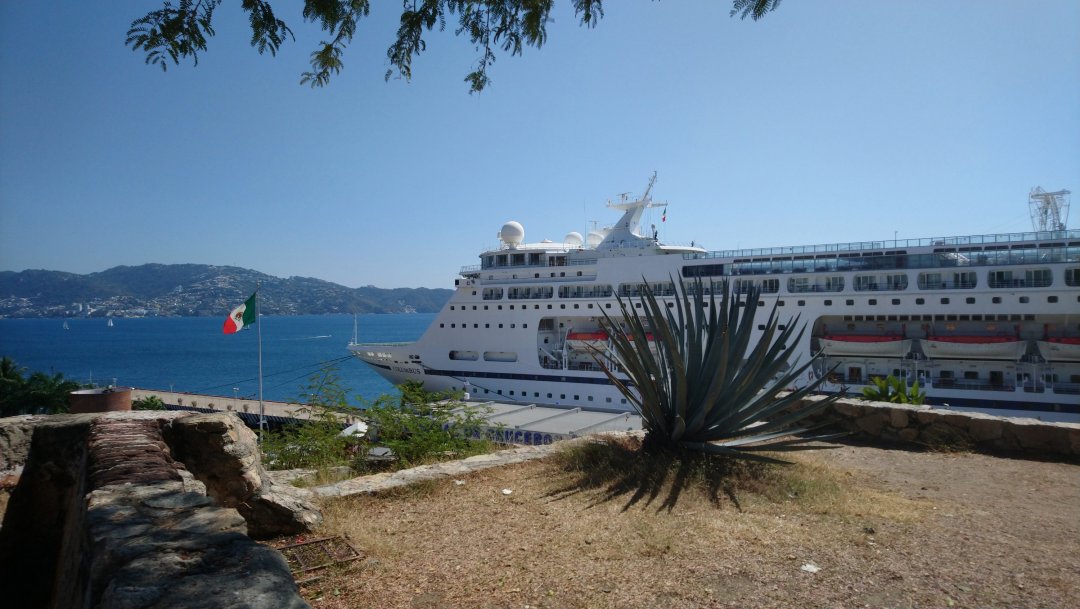
It was evident as we left the ship that the Mexican authorities were taking our safety very seriously. Armed police were stationed everywhere, their presence reinforced by patrolling combat troops in full camouflage and tactical gear.
Reassuring? Well… that depended on how you looked at it.
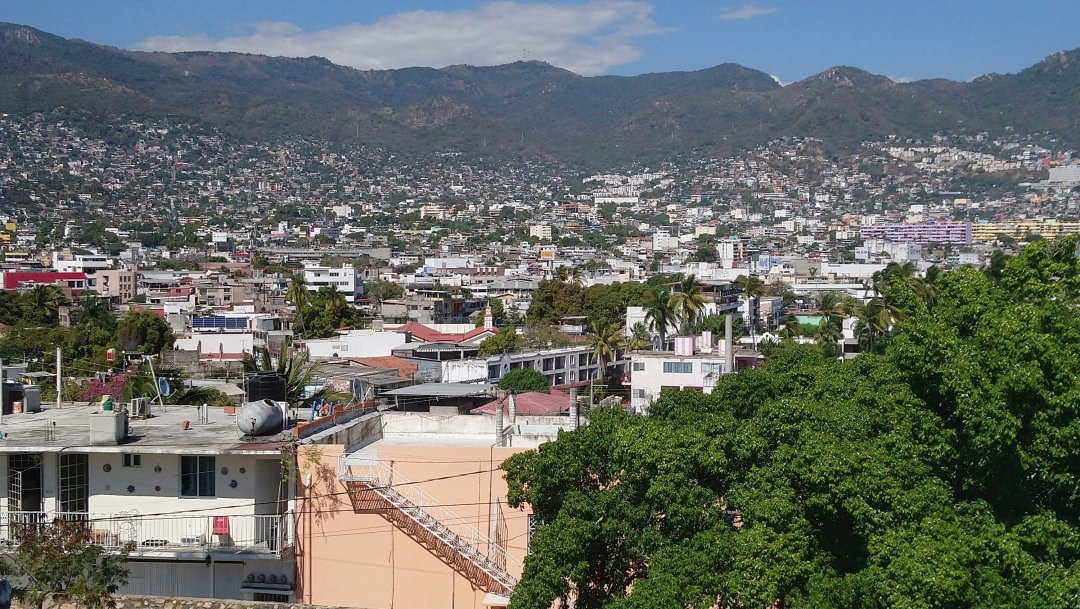
Acapulco began as a small fishing village, first discovered by the Spanish during the time of conquest and later by Hollywood icons like John Wayne, who, along with his fellow film stars, would jet down from Los Angeles to escape the adoring crowds. They made it their playground, with Wayne even purchasing a hotel to accommodate his personal guests.
The bay itself is undeniably beautiful, framed by rolling hills and blessed with the perfect combination of warm seas and a balmy climate. Today, high-rise hotels dominate the skyline, and urban sprawl has crept into the surrounding hills, yet Acapulco still retains an aura of past glamour. No matter which way you turn, it remains an incredibly photogenic place.

We had come to tick off one of our bucket list experiences: witnessing the legendary cliff diving of Acapulco.
After initially ignoring the polite but persistent taxi drivers touting for trade at the port exit, we set off on foot with a few other early disembarkers. Armed with a rather inadequate free map, we strolled along the seafront, attempting to navigate our way to the Hotel Mirador, where the famous divers would be plunging into a narrow, water-filled ravine.
The walk quickly became a challenge under the ferocious sun, and seeking shade became essential, as there was little to no breeze to offer relief. Eventually, we reached a point along the coastal road where we veered inland, crossing a narrow strip of land between two bays. Descending onto a local beach nestled between cliffs, we found ourselves among families enjoying a leisurely Sunday stroll.
We followed a raised cliffside walkway, passing clusters of cats patiently gathered around fishermen gutting their catch, waiting for the inevitable scraps. At the end of the path, we returned to the beach before beginning our ascent along the road and footpath on the opposite side.

The final stretch of our route was fully exposed to the relentless sun, but along the sidewalk, every 50 meters, large sail-shaped signs provided a welcome distraction. Each one displayed images of past and present Hollywood and Mexican movie stars who had once graced Acapulco with their presence. At the very top, naturally, was John Wayne, who had been granted his own dedicated viewpoint. This small arena, likely used for local theatre performances, offered a breathtaking seascape as a backdrop.
Taking a brief rest under a covered pergola, I decided to practice my limited Spanish on a friendly couple seated nearby. Asking for directions to the Mirador, we were delighted to learn that we were only a few hundred metres away.
With impeccable timing, we arrived at a viewpoint just as the cliff divers were making their ascent. Like agile spiders, they climbed the jagged rock face toward two small blue shrines built into the cliffside. Here, they paused to say their prayers before preparing to dive.
We watched in awe, capturing photos and videos as the divers executed their breathtaking feats. The sequence began with two solo dives, followed by a synchronised double dive, and finally, the pièce de résistance, a single dive from the highest perch of all. From the moment of launch, their descent was astonishingly swift, but what struck me most was the eerie shadow that accompanied each diver, projected onto the cliff face. It was as if their very soul had momentarily separated from their body, chasing them down the rock wall, desperately trying to rejoin before the water’s surface intervened.
A mesmerising spectacle, and a memory to treasure.
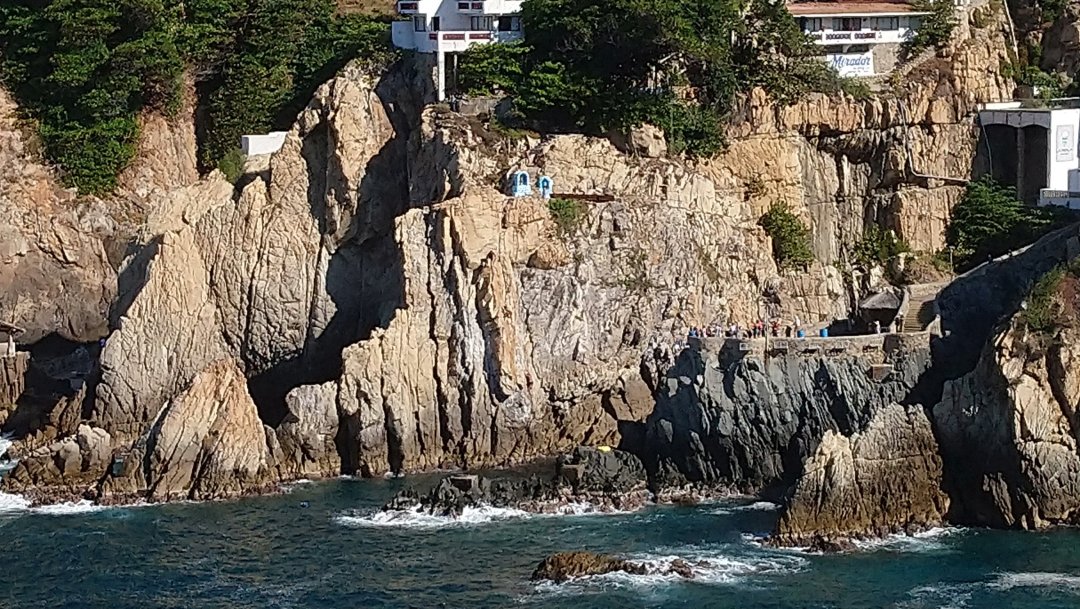
After chatting with another couple who had, unfortunately, arrived too late to witness the spectacle, we made our way down into the ravine to get a closer look at the water the divers were risking their lives to plunge into. From this vantage point, it was clear that the water was deep, but the ravine itself was alarmingly narrow, no wider than the span of a king-size bed. The cliffs were jagged and scarred with sharp, protruding outcrops, making the prospect of drowning seem almost secondary to the danger of striking the rocks on the way down.
As we took in the perilous scene, we noticed a few more divers practising from a lower level on the opposite side of the main cliffs. It was here that we learned an interesting fact: cliff diving in Acapulco is not just a profession but a deeply rooted tradition passed down through generations. The divers come from just three local families, and this lineage is fiercely guarded. Their livelihood depends almost entirely on audience donations, tourists and spectators stuff dollar bills into the divers’ trunks as payment (assuming they successfully resurface). Whether they also receive any compensation from the Hotel Mirador, which benefits greatly from their performances, remained a mystery. If they didn’t, they certainly should.
With the morning’s adventure behind us, we returned to the ship in time for lunch. But not before taking a moment to visit the city’s colourful Cathedral, which was packed with worshippers, and making a brief foray into a local market. Back on board, a much-needed cold shower and a fresh T-shirt provided momentary relief from the relentless heat, before we once again ventured out into the sun-drenched streets of Acapulco.

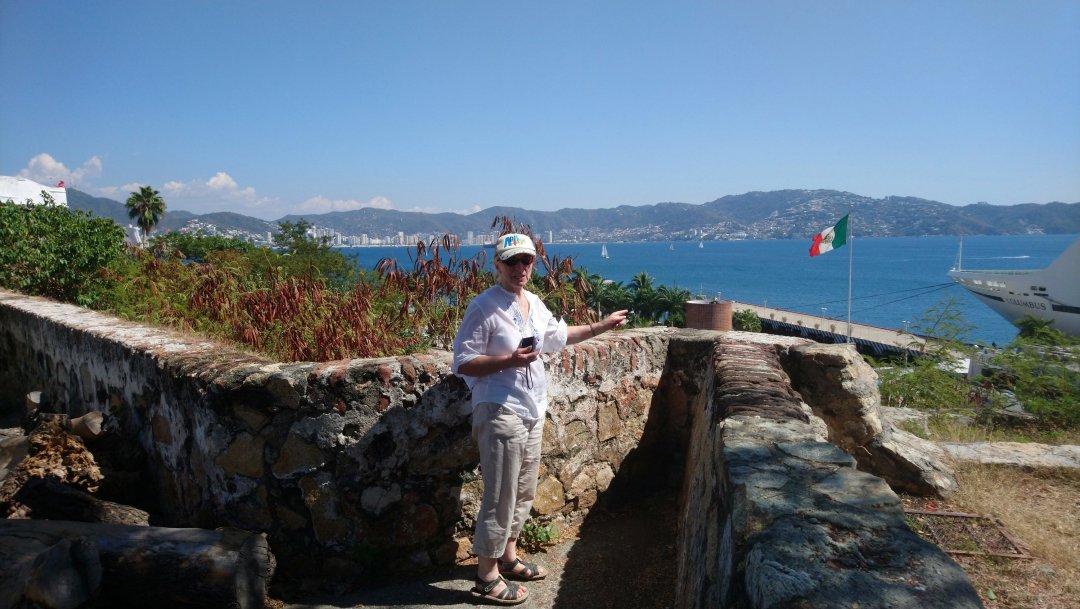
This time, we crossed the road by the port exit and climbed the steps leading to the fort. Surprisingly, it felt slightly cooler than in the morning, though whether this was due to a shift in the breeze or simple acclimatisation was uncertain.
Entry to the fort was a modest $4 each, granting us access to its 11 mini-museums. The structure itself was pentagonal, and within its variously sized rooms, exhibits detailed different aspects of Acapulco’s and Mexico’s history. A lifesaver in the midday heat, the fort’s air-conditioning units were remarkably efficient. I found myself lingering near them while Sue, as usual, methodically read every scrap of information available.
Once we had thoroughly investigated the internal displays, we made our way up to the roof and battlements. The panoramic views of the city and bay were breathtaking, an undeniably strategic location for a defensive structure. However, standing atop the sun-scorched flat roof, it occurred to me that it could also serve as an excellent bakery. The sheer heat radiating from the surface could have easily baked loaves of bread, though, in the absence of dough, Sue and I made a decent substitute.
While the vantage point was superb, the relentless sun soon had us retreating to ground level, gratefully seeking refuge in the shade of some nearby trees.
Making our way back to the morning’s market, we stumbled upon a museum showcasing face masks used in Carnival and local festivals. Some were centuries old, and all were beautifully crafted, though many depicted grotesque figures. We watched a vibrant video of the Carnival, followed by a short explanation of the mask-making process, before moving on.
The sheer number of soldiers we passed en route was both reassuring and unsettling. In one street, we came across a queue of young men clutching forms, lined up at a desk overseen by a stern-looking officer. It soon became clear that they were being recruited into the army.
At the market, Sue abandoned me to the shade of a large tree while she embarked on a quest for the perfect dress. Amusingly, I had been sitting on a low stone wall for about 20 minutes, watching the hustle and bustle, when I noticed movement to my right. To my surprise, two soldiers were stood just a few feet away, their camouflage blending seamlessly with the tree’s foliage. The drug gangs didn’t stand a chance around this particular tree, but I suspected it might be a different story elsewhere in the city.
Fortunately, despite trying on several outfits, Sue found nothing to her liking, so the dollars remained safely in my wallet. With a hint of disappointment (at least on her part), we returned to the ship, leaving the traders, soldiers, and dealers to their own affairs.
Acapulco, you are a beautiful city with so much to offer. I sincerely hope you overcome the challenges you face. You are clearly trying, and I wish you well. Perhaps one day, we will return when the streets no longer need to be guarded by guns.
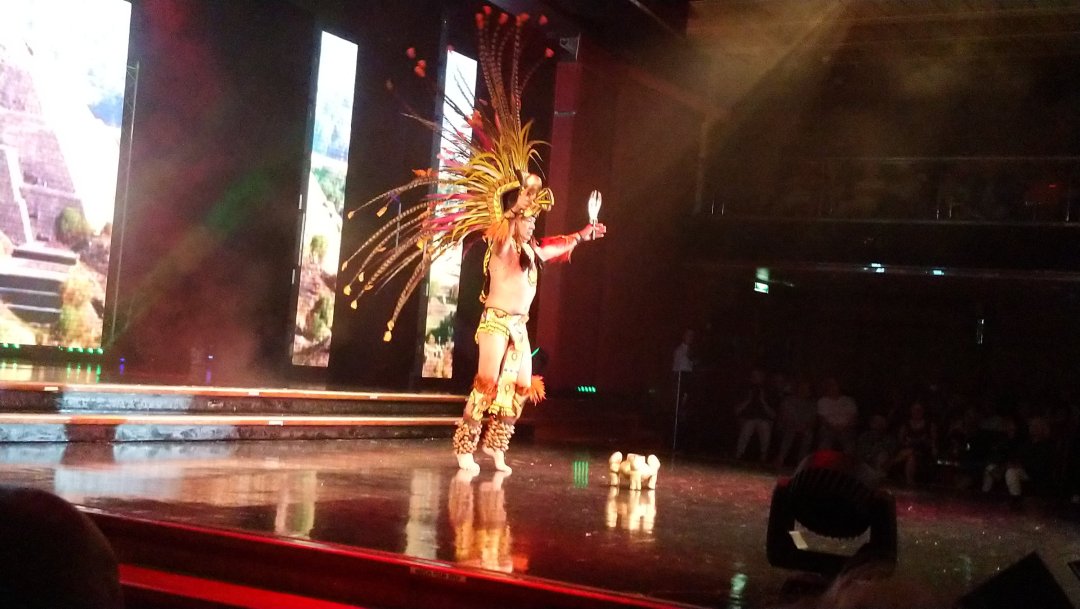
That evening, as we sailed away from this iconic playground of the 1950s and ’60s, we celebrated ‘Mexican style’ on the top deck, safe within the confines of our rather large tin can.


Leave a comment